Foods In Season Make Sense. Out of Season They Can be Unhealthy.

New study comes down hard on honey.

“This is why honey only exists in spring and summer. Everything is linked in nature. In the summer months when UV is higher, Vitamin D production rises to offset oxidative events. Fruit and natural sugars are 100% OK WHEN IN SEASON FOR YOUR LOCAL ENVIRONMENT”.

I like this post above and study (linked below) shared on Facebook by Pale Osteo.
The above comments confirm what I have always said about fruit and sugar, in addition to honey.
Fruit often receives a bad rap for being high in sugar. This never made sense to me as fruit has grown in nature for millions of years, meaning we evolved eating sugar. Therefore our system evolved to process it effectively.
However, our hunter gatherer ancestors (and beyond) did not have access to all fruits. Only the fruit that was available to their climate in the season that they were in.

Like honey, fruit is not bad or fattening if you eat the fruit that is available in your climate in season.

The idea of consuming all fruit all year around is not natural.
An good example is with tropical fruits. These fruits, like bananas and mangoes, are high GI or sugar fruits, but they grow in warm, humid environments – the tropics. In this environment, the plant sweats more and must replace its own sugars. The same occurs for animals and humans in this environment.
But eating tropical fruits in the winter in temperature climates like Victoria is not natural. In this case, it is more sugar (or carbohydrate) than we need, as we sweat much less in winter.
The question I always ask clients when they ask me if fruit is bad for you is; “would your hunter gatherer ancestors have eaten it?” The answer being yes.
And; “would a truck have driven down the highway or a plane have supplied tropical fruits to our ancestors living in temperate climates?”
Clearly not.

The simple rule of thumb to live by is to consider what you would have eaten when wandering the bush – as a hunter gatherer.

Our best understanding suggests that the body we have now has been inherited from our hunter gatherer ancestors of 40-100,000 years ago.
Essentially, our bodies still think we are wandering the bush.
So eat fresh food that is seasonal to the climate you live in and you can’t go wrong.

http://www.grubstreet.com/2015/09/honey-study.html?mid=facebook_nymg


The Breathing Dynamics Solution to Asthma and Hay-fever

Case Study – Breathing retraining offers simple and highly effective relief to asthma, hay-fever, allergies and other breathing difficulties.

With Spring now upon us, asthma, hay-fever and other allergies become a debilitating problem for many people – especially in areas such as Melbourne and the Surfcoast.

Millions of dollars are spent each year by sufferers on pharmaceutical drugs or natural medicine alternatives searching for relief from symptoms.

Yet, the root cause of, and therefore the solution to, many of these complaints does not lie in what foods or remedies  you may put in your mouth. It is our breathing function, or dysfunction, that explains the cause and provides the solution.

Dysfunctional breathing, or over breathing, results in a cascade of changes in our bodies that result in asthma and breathing difficulties, hay-fever and many other allergies symptoms.

For example, when you over breathe (meaning you breathe too rapidly and with too much volume) you upset the biochemical balance in our bloodstream that dictates how oxygen gets from the air we breathe in our lungs to our body’s cells for energy production. It is the carbon di0xide (CO2) we exhale as a bi-product of energy production that regulates how oxygen lands into our cells for energy production. And this CO2 is not a waste gas. We need to retain some (6.5%) in our lungs at the end of exhalation for this regulation to work efficiently. When we over-breathe we wash out this reservoir of 6.5% CO2 in our lungs. The result is that you don’t get enough oxygen into the cells for energy production and the body will cause smooth muscle around our airways in our lungs to constrict or spasm to limit the loss of CO2 and correct this imbalance.

The difficult thing is that virtually all of us over breathe nowadays, so this above problem is not uncommon.

Or in allergic responses, dysfunctional breathing predisposes the body to produce too much histamine making you more likely to have an immune response leading to an allergic reaction.

The wonderful thing is that retraining your breathing to functional levels is easy and doesn’t take long before you notice symptoms disappearing.

I had a client yesterday who has suffered from asthma since 10 years of age. He is in his 50’s now. He uses Serotide twice daily and uses his Ventolin puffer 5-6 times per day – mostly at night. He gets hay-fever as well, and this often triggers asthma attacks. He has also had injections to try to relieve his hay-fever.

His sleep is terrible with lots of snoring, frequent waking throughout the night, a dry mouth throughout the night and in the morning and he wakes unrefreshed each morning. He had his tonsils out as a child and again as an adult as they grew back

I put him on a breathing retraining program that included practicing breathing rhythms and breath holds as well as keeping his mouth closed at night.

After one week the difference he has noticed have been vast. In his words; “I feel like a miracle has happened”.

He’s now not snoring, no dry mouth and frequent waking at night, and is waking much more refreshed in the morning. His wife is very happy 🙂

His ventolin use after 1 week has dropped to 2 per day at a maximum on bad days (with strong winds). On other days he used only one puff. Or none.

He feels he can breathe much clearer and feels far less fearful of an attack. And much more energetic.

We will continue his training for 2-3 months to ensure the changes stick and to slowly wean him off his asthma medication. Whilst these medications relieve symptoms, they never deal with the root cause of his symptoms and always lead to side effects.

It is very common that with breathing retraining can either eliminate clients reliance on medicines for asthma and allergies all together, or reduce the amount the use quite considerably.

The result is that they save money and side effects.

If you suffer from asthma and breathing difficulties, or hay fever and other allergies, why not consider an alternate that is highly effective in terms of results and cost.

The case study mentioned is not an unusual case in my experience as a respiratory therapist. I see this regularly and love it when people with these conditions come to see me as I know how potent the breathing retraining is.

And the great thing about this case is that he lives in Adelaide so we have conducted our consultations via Skype. I have found that this is equally as effective as working with clients one on one in clinic. They beauty of it for the client is that they don’t have to leave their home. And it makes this service available to asthma and allergies sufferers all over Australia or the World.


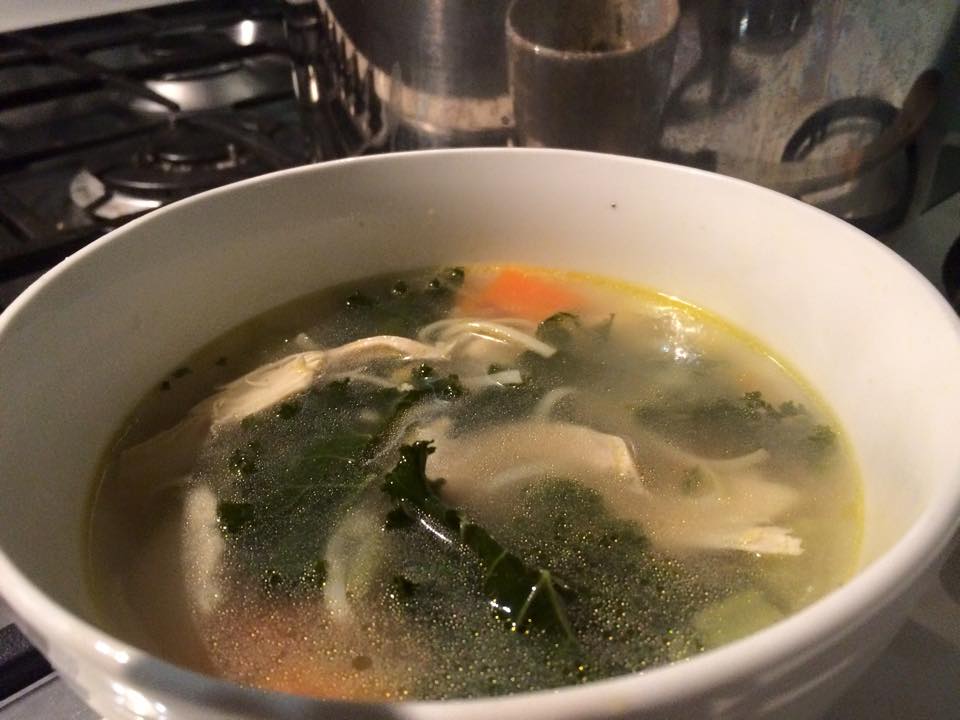
Chicken soup

Flu fighting chicken soup

Chicken soup lives up to all its flu fighting, soul healing hype….especially when it’s made with real stock from your kitchen. Western medicine is even coming to the (slow) conclusion that chicken soup is better than most over the counter cold and flu medications. How?  Studies have shown that chicken soup inhibits the movement of neutrophils, the most common type of white blood cell that defends against infection. The theory is that by inhibiting the migration of these infection-fighting cells in the body, chicken soup essentially helps reduce upper respiratory cold symptoms.

For those days when it says it’s Spring but feels like Winter or when you feel like you’ve been hit by a plank in the side of the head…you need:

For the stock:

1 roast chicken carcass (I love making stock from my roast chicken carcasses. Great flavour, complete use of the bird.)

Onion, celery, carrots – seriously, whatever veggies you have sitting around

Parsley, rosemary, lemon thyme, sea salt & pepper

Whack some water over the bird, veggies and herbs. Boil & then let simmer away for about an hour, skim any of the yucky stuff off the top, strain and you have the base for chicken soup!

For the soup:

Any meat from the left over chicken

Some greens like kale, silver beet or spinach chopped pretty finely

Carrot chopped

Garlic, ginger & onion

Celery, chopped

Soba noodles if you want a noodle soup treat

Slow fry the onion, garlic and ginger, add celery and carrots for about a minute, then add the stock & chook. I like to simmer for about 30 minutes before adding the noodles and greens.

Serve and smile. This is also a really good gift for any friends or family who are feeling sick. You won’t believe how much they appreciate this simple gesture!

End of Winter Blues

How to Beat the End of Winter Blues

This time of year can be hard to take. While the rest of Australia celebrates the beginning of spring with warmer temperatures, the Surf Coast takes a while to catch on. The cold continues, the wind stays solid and the sun doesn’t want to cooperate. Seasonal Affective Disorder (SAD) affects a large number of people, particularly when cloudy days outweigh the clear.  So, if you’re feeling like it’s harder to get out of bed, try these 5 simple tips to beat the end of winter blues. If these don’t work, it might be time for a holiday:

 1. Exercise

Outside. Even though it’s probably the last thing you want to do right now, outdoor exercise has huge benefits which will extend way beyond this season. Exercising outside in winter burns more calories, builds endurance and helps fight depression and to honest, there is nothing quite like the feeling of exercising on a cold, clear day. Just rug up. Gloves and a thin beanie will help ease you into it.

2. Soup

Make it. Eat it. Enjoy it. Soup is one of those wonder meals: easy to make, easy to digest and chock full of vitamins and flavour. It also makes the cold nights feel almost right. There’s something about eating a hearty veggie and beef soup that nourishes the soul as well as the body.

3. Socialise

Socialise. The Surf Coast goes into hibernation over the winter period, but socialising and making time to see friends and family will help lift your spirits and help your friends out of their respective winter blues (we all get them!). Organise a night of board games, a pot luck dinner or head out to The Kindness Co. meditation sessions on a Tuesday night.

4. Read

You know that book. It’s been sitting by your bed waiting to be read for nearly a year now. Grab a warm herbal tea, find a comfortable spot on the couch and escape for a couple of hours. Make a habit of reaching for the book instead of the remote each evening and let your imagination take over.

5. Learn

We’re lucky on the Surf Coast to have access to a community full of knowledge and stimulation. Keep an eye out for courses and classes which will help expand your horizons and keep you motivated. If you feel like a field trip, The School of Life in Melbourne has some really inspirational and thought provoking offerings.

Let me know what works for you to get through this final phase of winter and I’ll share your ideas on my Facebook page.

Bringing Sports Performance and Nutrition to Local Athletes

Fit, Fuelled and Focussed Seminar – September 2015

I’m very happy to be a part of the next Fit, Fuelled and Focussed seminar for young athletes on Tuesday September 29th from 10am to 5pm.

After the success of the seminar we ran earlier in the year in Geelong, we decided to offer the same for local junior sports people on the Surfcoast.

We combined the specific expertise of exercise physiologist, Michelle Hemley of Hemley’s Health, Fitness and Sports Development; sports and performance psychologist, Richard Bennett, of Om Psychology; and sports nutrition by myself.

It is great, and a lot of fun, to work with such knowledgeable professionals. I’m excited.

A great opportunity for young sports people to get an edge at a great price.

Refer to the flyer for details, or contact myself, Michelle or Richard to enrol or ask further questions.


Retraining your Breathing Eliminates Asthma

Treating Asthma by Getting to the Source or ‘Root Cause’ – Breathing

Linked below is a fantastic documentary published by the BBC back in 1998 looking at what’s known as the Buteyko Breathing method to treat asthma.

It’s just under half an hour, however if you have asthma or breathing difficulties, or know someone who suffers from it, it will be worth your time.

The video, filmed in Scotland, studied 4 asthma sufferers (some severely enough that they regularly end up in hospital) who relied on prescription medications and who were referred to a trial using the Russian Buteyko Breathing Method to treat their asthma.

Credit to the medical specialist who recommended these patients to the trial – although he took a bit of convincing.

The Buteyko method was developed by Professor Buteyko, a Russian doctor who was diagnosed with malignant hypertension at age 30, and not given long to live. Prof. Buteyko looked at how the human respiratory system works and used this knowledge to treat and cure himself. He went on to live for at least another 50 years.

Whilst it is not widely accepted, the Buteyko Breathing method is not unconventional at all. As mentioned, it uses our scientific understanding of the respiratory system and applies it to optimise respiratory function and alleviate symptoms of asthma and breathing difficulties.

Buteyko breathing treats the cause of asthma and breathing difficulties; not the symptoms, which are targeted by conventional medical practices.

The main cause is hyperventilation or over-breathing. In fact, the average person breathes twice as often and with far too much volume than they should (according to medical diagnostic norms).

This over-breathing disrupts the delicate biochemical balance in our respiratory system and blood stream that helps regulate respiration – the purpose of which is to get oxygen (O2) from the air we breathe into our cells for energy production, and to expel carbon dioxide (CO2) gas produced as a by-product of energy production.

This carbon dioxide is not entirely a waste gas however. It is vital for efficient respiration. In fact it is the limiting factor in respiration – it is the general in a show that sees oxygen from the air we breathe reach the cells for energy production. Without CO2 we don’t get any oxygen into our cells.

By retaining or storing some of the CO2 we eliminate during exhalation, CO2 performs this directing role. When we over-breathe we lose this retained or stored CO2 and our respiration becomes far less efficient, to the point that it can start to create problems or symptoms. These problems include asthma and other difficulties in breathing.

The symptoms occur because the body, perceiving it is under threat (because of the upset in biochemistry created by over-breathing), attempts to restrict the loss of CO2 by constricting the airways – leading to tightness, wheezing etc.

The Buteyko Breathing Method was used in this trial as it had been reported to reduce the symptoms of asthma and the reliance on asthma medications. Unsurprisingly, most medical professionals at the time viewed it as ridiculous.

Interestingly, and not surprisingly for me, all patients in the trial noticed a big difference in their symptoms within 5 days. In fact, one patient eliminated use of her medication entirely despite a lifetime reliance on steroids and bronchodilators.

The results were enough for the specialist doctor to conclude that; “perhaps we are underestimating the number of asthmatics who over-breathe chronically.”

Yet, positive results are not enough for medical professionals to take it seriously world-wide. At that stage the only research study ever conducted outside of Russia was conducted in Brisbane, here in Australia. The trial compared a group of asthmatic patients using the Buteyko Breathing Method for training with a group using the conventional medical approach. Initially the Buteyko group reported feeling better than the conventional medical group, but did not perform better in lung a function test – although this test has been seriously questioned over the years. However the long term results spoke volumes. The Buteyko Breathing group showed a 90% reduction in the use of bronchodilator medicine and 49% reduction in use of steroids after 3 months.

That suggests a huge improvement in the Buteyko group and huge savings of dollars over time.

Ironically, very few studies have been carried out since and, at the time, the Australian government had no more plans to run future studies. Why you ask?

Perhaps because most of the research is funded by the pharmaceutical companies!!

I have been a respiratory therapist for around 6 years now and use breathing methods based on the Buteyko Breathing principles. I also incorporate bio-feedback technology that comes from hospitals, called capnometry, to teach functional breathing rhythms.

My experience with clients has been similar to those reported in the video. I have seen many clients either reduce or eliminate asthma or breathing difficulty symptoms, as well as their reliance on prescription drugs.

Here is a testimonial from a happy client:

“Just wanted to say the breathing exercises have helped tremendously. I did a cardio session this morning and I didn’t need to use my puffer at all, and feel great. Not puffed out or wheezy at all!!!………my issue with the breathing has really held me back with my fitness and now there’s no stopping me!”  Mimi, Melbourne

Instead of running 5 day courses in groups, I treat clients one on one in clinic over a few weeks using the Buteyko breathing retraining methods and bio-feedback technology in Torquay, Geelong and Melbourne by appointment.

Given that spring and hay-fever season is fast approaching, now is a better time than ever to use natural methods that get to the cause of asthma and breathing difficulties instead of relying on medication and dealing with their side effects.

The same principles that make breathing retraining so effective in treating asthma and breathing difficulties so effective, also make it extremely effective in treating the following conditions:

  • Anxiety and Depression
  • Snoring and Sleep Apnoea
  • Sinusitis, hay fever and other allergies; i.e. eczema
  • Fatigue
  • Headaches and Migraines
  • IBS and gut problems
  • Poor peripheral circulation
  • High blood pressure.

For consultations or advice, email me at tim@timaltman.com.au or call 0425 739 918.


Lemon Bliss Balls

The best lemon bliss balls

If you want to make my personal favourite version of Lemon Bliss Balls, here’s the recipe. These dynamite bombs of goodness have the right blend of sweet and tang with a coco-nutty good shell. This recipe is a combo of a couple of recipes that I took different ideas from to suit my palate.

You can change quantities to find  your own perfect palate fit, just try and keep the wet and dry ingredients matched for the right consistency.

These are seriously good…and good for you. They’d be great for kid’s lunchboxes, if they get that far!

1 1/2 cups of desiccated coconut
1 cup of almond meal
1/4 cup coconut oil
2 tbls maple syrup
Grated zest and juice of a lemon
1 teasp. vanilla extract
pinch of sea salt.

Pop it all in a blender and wiz it until it has a dough like feel. Roll into balls and dip into some extra coconut. Stick it in the fridge for at least 1/2 hour. That’s it…..! I keep them in a lunchbox in the fridge. I think they last for about 4-5 days, but mine won’t last that long.

15 Benefits of Sauna Therapy

Sauna Therapy for Super Health and Wellness

Sauna therapy has gained a bit of momentum as a health modality in Torquay, Victoria of late courtesy of sauna at one of the local fitness centres. We have had a bunch of regulars gathering there frequently. It has become quite a social gathering at times.

This may come as a surprise to many Australians, where sauna therapy is highly undervalued.

But not so in many parts of the world – and there’s more behind it than just tradition.

Saunas have been used for thousands of years by Scandinavians, Russians, North American Indians and many others.
In Russia and Finland, there is a saying that every day you take a sauna is a day that you are not ageing.

The skin is the body’s largest organ and our interface with the physical world. Through perspiration, it acts as an important vehicle for the elimination of toxins. The skin is often referred to as the ‘third kidney’.

Saunas assist greatly in the elimination of toxins. In the process the skin is cleaned of surface bacteria and dead skin cells – something that cannot be done by just taking a shower or bath. The sauna also cleans the capillaries, resulting in vastly improved skin condition.

The skin is the body’s largest organ and our interface with the physical world. Through perspiration, it acts as an important vehicle for the elimination of toxins. The skin is often referred to as the ‘third kidney’.

“Give me the power to create a fever, and I shall cure any disease”.

These are the words of Hippocrates, the founder of Western medicine more than two thousand years ago.

Although misunderstood as a symptom of disease, fever is actually a part of the body’s natural healing response. During a fever, the functioning of the immune system is stimulated, whilst growth of bacteria and viruses are inhibited. All of us would be aware of the great feeling of cleanliness and well being experienced after a fever has passed through us. Saunas elicit similar responses and are often called ‘artificial fevers’.

Extensive research has been carried out on the benefits of sauna therapy, particularly in Russia, Scandinavia and Japan.

In this blog, I will draw on some of these findings to outline 15 of these benefits:

1. You feel fantastic afterwards – First and foremost, and this has nothing to do with research, you feel fantastic after a sauna – especially if you have a cold shower or swim immediately afterwards. It is a feeling of cleanliness, aliveness, and relaxation.

2. Improved circulation

3. Enhances detoxification – via increased sweating.

4. Increased oxygenation of tissues and cells – leading to more energy and less chance for bacteria and viruses to thrive.

5. Stimulation of the immune system – including less colds and flus.

5. Improved skin quality – it enhances removal of toxins from sub-cutaneous fat cells below the skin’s surface, so your skin looks cleaner, fresher and softer.

6. Improved sleep quality – those who have regular saunas will tell you of sleeping like a baby afterward.

7. Improved weight loss.

8. Reduced stomach acidity.

9. Lowering of blood pressure.

10. Benefits in treatment of pain management – including arthritis, fibromyalgia and sports injuries.

11. Stress management.

12. Improved recovery time following sports training – including reduction in soreness post training or from sports injuries.

13. Increased muscle concentration and power.

14. Reduces the cold, nervous feeling that causes shivering before competition and that can make athletes prone to injury.

15. Last but not least, it is fun – especially if you sauna with friends. It is common in Scandinavia, Japan and Russia for sauna to be part of the activities of an afternoon BBQ or evening catch up with friends. Many cultures also conduct business meetings in the sauna – including me 🙂

If you haven’t embraced the wonders of sauna therapy, then find your local sauna and give it a go. It can take a little getting used to, but it’s worth persisting.

I’ve always aimed for at least 3 saunas per week and use Russian protocols that I learned of 3 sets of 10-15 minutes each in the sauna, with 5 minutes in between each set, and followed by a cold shower (no warm water at all) immediately after the 3rd set.

You will feel completely ALIVE afterwards.


Stress

6 Ways to Reduce Stress That You May Not Have Considered

Our small, insidious daily habits are often the ones that rob us of energy and lead to pain and illness.

Following is a link to a MindBodyGreen article on stress and how small changes can make life more….liveable.

We all know about multi-tasking. We’re all sooo busy. Nowadays there’s too much to get done with never enough time.

In my work dealing with fatigue, pain and chronic illnesses such as IBS, CFS, Fibromyalgia, Anxiety, Depression etc. I regularly see how damaging this pattern of increasing busyness and the resultant stress it creates, is to our health.

It is accepted among the scientific community that most of the attitudes we carry through our lives are laid out or set by the age of 8-10. Some of these attitudes serve us, and some of them limit us, or take from us – these are the self limiting patterns. Unless we identify them and break them, they define our lives. What makes it difficult is that they are not easy to identify as they become sub-conscious and habitual by the time we hit our teens.  So, essentially our adult lives are defined by patterns set up when we were children and were not capable of thinking as rationally as we do now.

I very often see a pattern set up that involves a ‘sub-conscious relationship between stress and safety’, meaning we habitually and unconsciously make ourselves busy in order to stay ‘safe’.

To elaborate, a young child who is threatened or experiences some pain (physical or emotional) is likely to think, “I don’t ever want to experience this again”. Lacking the rational ability to look at this event objectively, the child then feels that the only way to be safe from feeling this way again is to be ‘on guard’ all of the time – meaning they they stay in fight or flight responsiveness. Once habituated this plays out in adulthood with us being perpetually busy to stay ‘on guard’ and safe – although, in adulthood, it is so habitual that we have no idea that this is why we are alwasy so busy. This pattern keeps us busy to stay safe. It is evident in a very large percentage of us.

And it actually sends a message to our instinctive, pre-thought emotional brain that we are not worthy of balance.

Unfortunately we are the ones that lose as it means that we perpetually internalise stress sending our bodies in overdrive and providing the perfect breeding ground for chronic illness. And this includes more niggly day to day complaints such as putting on weight. We get so busy, we never have time to prepare the ideal food or prioritise ourselves and do regular exercise.

So why not multi-task? We get more done in less time. Right? Surely that will make us less busy?

Wrong. Research has suggested that multi-tasking does not work – it decreases productivity by up to 40% and can shrink your brain and lower your IQ.

The linked article suggests 6 single tasking techniques that will reduce the stress we internalise and help us break free of this pattern.

I particularly like point number 6.

Carve out regular quiet time.

In a noisy world with 24/7 news, you’re bombarded by distractions as, unfortunately, your brain becomes trained to avoid quiet reflection.

So next time you’re “busy” surfing the Web, ask yourself if you’re really just sidestepping solitude or introspection. And if that’s the case, resist that avoidance, and carve out a little time each day to be left alone with your thoughts.”

Are you guilty of this?

I certainly am. So often we find distractions such as social media, surfing the net, TV etc. etc. rather than selecting quality quiet time or time spent doing things we love. These are the things that reduce the stress load that we internalise and send a message to our emotional brain that we are worthy – that we are perfect as we are right now.

NOTHING MORE TO DO. NOTHING MORE TO BE.


http://www.mindbodygreen.com/0-20655/singletasking-6-keys-to-a-peaceful-productive-prosperous-life.html

Games for a Healthy Brain

Activities for a Cold and Rainy Winter’s Day

On those days where it is cold and rainy outside,a nd you don’t feel like exercising the body, there’s still plenty to do to exercise your brain.

Rather than watching mind numbing television or getting lost on social media, Scrabble is great fun and great for family time. And so good for your brain.

Occasionally you end up with the right letters in the right place and you score a big one – 78 points in this case.

I was King for a day – until the next time we played at least.


Breathing Your Way to Health

Diaphragm Breathing Can Regulate your Nervous System to Treat and Prevent Chronic Illness

An interesting article below on the role of the vagus nerve in regulating the autonomic nervous system – or the automatic functions in our body (functions that work whether we aware of it or not).  Following are some extracts that give some background and that point to the importance of understanding mind body interactions when exploring prevention and treatment of illness and optimal living.

“Vagus’ is Latin for ‘wandering’ and indeed this bundle of nerve fibres roves through the body, networking the brain with the stomach and digestive tract, the lungs, heart, spleen, intestines, liver and kidneys, not to mention a range of other nerves that are involved in speech, eye contact, facial expressions and even your ability to tune in to other people’s voices. It is made of thousands and thousands of fibres and 80 per cent of them are sensory, meaning that the vagus nerve reports back to your brain what is going on in your organs.

Operating far below the level of our conscious minds, the vagus nerve is vital for keeping our bodies healthy. It is an essential part of the parasympathetic nervous system, which is responsible for calming organs after the stressed ‘fight-or-flight’ adrenaline response to danger. Not all vagus nerves are the same, however: some people have stronger vagus activity, which means their bodies can relax faster after a stress.

The strength of your vagus response is known as your vagal tone and it can be determined by using an electrocardiogram to measure heart rate. Every time you breathe in, your heart beats faster in order to speed the flow of oxygenated blood around your body. Breathe out and your heart rate slows. This variability is one of many things regulated by the vagus nerve, which is active when you breathe out but suppressed when you breathe in, so the bigger your difference in heart rate when breathing in and out, the higher your vagal tone.

Research shows that a high vagal tone makes your body better at regulating blood glucose levels, reducing the likelihood of diabetes, stroke and cardiovascular disease. Low vagal tone, however, has been associated with chronic inflammation. As part of the immune system, inflammation has a useful role helping the body to heal after an injury, for example, but it can damage organs and blood vessels if it persists when it is not needed. One of the vagus nerve’s jobs is to reset the immune system and switch off production of proteins that fuel inflammation. Low vagal tone means this regulation is less effective and inflammation can become excessive.

“One nerve connects your vital organs, sensing and shaping your health. If we learn to control it, the future of medicine will be electric.”

The article outlines the importance of the vagus nerve in regulating many of the vital bodily functions, as well as the immune response and inflammation in our bodies. Given that 90% of deaths in the Western world are a result of chronic inflammatory illnesses, this is a very worthy investigation.

It discusses the use of an electrical implant (in the neck) that can help increase vagal tone. This is a great discovery that could have far reaching impacts on medical treatments and reduction in our reliance on medicines that unfortunately come with unwanted side effects.

However, we’ve always had the ability to regulate our autonomic nervous system via the vagus nerve without ever having to artificially manipulate it.

The Role of Diaphragm Breathing in Increasing Vagal Tone and Regulating the Autonomic Nervous System

Of all of the functions controlled by the autonomic nervous system, breathing is the only function we can easily and conscious control.

And the primary muscle that drives breathing, the diaphragm, is supplied and regulated via the vagus nerve.

Meaning that if you can control your diaphragmatic contraction and recoil you can manipulate it to increase vagul tone to optimise many of the automatic functions in our body and reduce inflammation.

The problem is that most of us do not breathe even close to ideally or functionally.

According to medical diagnostic norms, we should breathe primarily using our diaphragms and exhalation should be 50% longer than inhalation.

The exhalation is enervated by the arm of the nervous system that enhances digestion and rests and relaxes us – the parasympathetic nervous system.

(Whereas inhalation is stimulated by the sympathetic nervous system which is stimulates what is known loosely as the ‘fight or flight’ response and promotes inflammation).

Accordingly, the parasympathetic (rest and digest) nervous system should predominate over the sympathetic (fight or flight) in our systems. Ideally they work together, just with the parasympathetic slightly predominant.

Unfortunately, most if us breathe mostly with chest and shoulders, which are considered the secondary muscles of inhalation used in cases of emergency (exercise or when someone startles us and we gasp).

Inhaling mostly using chest and shoulders it gives us no way to control the recoil of the chest and diaphragm on exhalation as the secondary exhalation muscles include muscles in the abdomen.

The result is that our inhalation ends up longer than exhalation, our diaphragm gets weak and atonic, our vagal tone becomes very low, and ‘fight or flight’ nervous system responsiveness predominates.

Not a good picture for long term health.

Yet it is easy to retrain functional breathing via the diaphragm.

I have researched this with colleagues who are experts in stabilisation and diaphragm control, and trained clients in clinic for many years now using biofeedback technology and the results have been profound with many chronic ailments – including asthma and allergies, IBS and gut conditions, high blood pressure, anxiety and depression, headaches and migraines and snoring and apnoea. As well as in enhancing performance for athletes, artists and for work performance.

The linked article even refers to a study that found that people who meditate display increased vagal tone and parasympathetic nervous system dominance.

The diaphragm breathing techniques that I teach offer create the same response, are very simple to learn, and offer an excellent lead in to meditation practice or learning how to meditate.

You don’t need to artificially manipulate anything (be it via drugs or electrical implants) to regulate your nervous system and open your body to optimal health. Our bodies have always had the potential for levels of health that most of us never see. We just need to learn how to open these levels up by understanding how the body works more intimately.

There are no secrets. No secret potion or machine that will ever solve our physical and mental health woes.

It is the constant under-performance of the aspects of living that influence our health (breathing, nutrition, movement and stabilisation, how we process emotions and stress etc) that lead us to ill-health and chronic illness in the first place. This is brought about by the mismatch between the world we have now created and the body’s we have inherited from our hunter-gatherer ancestors. Technology has simply moved too quickly for evolution.

Returning to optimal health and performance does not mean turning our back on technology and going back to our hunter-gatherer ways. The planet would not sustain this anyway with such a population that we now have.

The solution lies in understanding how to perform these aspects of  living ideally or as we are built to, and incorporating that into our modern culture. Into our current living circumstances – be it how you breathe, eat, drink etc. etc.

Essentially, we need to refrain from interfering with our body’s natural capacity for health.

Optimise the aspects of living that influence your health and you will allow your body to thrive. It is simple, but it does involve practice, perseverance and changing some habits.

The end state is that you will be healthy and happy.

I offer breathing retraining in my clinics in Geelong or Torquay or remotely via Skype or phone.


http://www.huffingtonpost.com/2015/05/29/hacking-the-nervous-syste_n_7469526.html


Fasting to Regenerate Your Immune System

Fasting Can Regenerate Your Immune System in 72 Hours

Much of the treatment used in healing my Chronic Fatigue Syndrome (CFS) in the early to mid 90-‘s utilised fasting as a healing tool.

It was very daunting to me at first – the idea of not eating for extended periods of time did not sit well with me! In my case, I went on a 16 day juice fast – involving 350ml of freshly made vegetable and fruit juices twice a day, the occasional herbal tea, plenty of water, and frequent gut cleaning via herbal enemas.

Not a lot was known about fasting then, and I had MANY well intentioned ‘experts’ tell me I was doing more harm than good. This increased my anxiousness about doing the fast, however the practitioner who was treating me was a former research biochemist in the former Soviet Union who had done extensive research on fasting to treat chronic illnesses and to create optimal levels of health. Yes, the Russians were way ahead of the Western scientific community in their understanding of fasting and many natural health treatments. It is only over the last 10 years or so that Western scientists have started to catch up in this research.

At the time, I was desperate as nothing that anyone else had used or told me about to treat this condition had helped – in fact, most doctors told me I was making it up. I can assure you I didn’t exactly like being as tired and ill as I was all of the time. It was devastating. It shattered sporting dreams I had held since I was a kid and halted my university education severely.

Because of this, and because I trusted the Russian practitioner I was working with, I embraced my fears and discovered the wonderful healing powers of fasting. It was a process that not only helped me completely recover from CFS (no sign of a flare up in the 20 years since), it also changed the direction of my life.

I pursued a career in natural health as a naturopath and have used fasting as a modality in my clinical work ever since, implementing various fasting lengths (from 1-21 days) and types. This is a tool that should not be taken lightly and I have always supervised clients who are conducting fasts, to ensure that they are conducting them properly and coping well.

I have also personally done the same fast 5-6 times since the original one and many one to three day fasts over the ensuing years. My experience has always been that my immune system is far more robust for at least 12-24 months following a longer fast and my energy levels and mental clarity also stay very strong for an extended period after the fast.

The same occurs, in similar ways, when I have fasted periodically; i.e. one day a week or fortnight for several months at a time.

Whilst fasting is not the only modality I use in treating chronic illnesses such as CFS or to create optimal health and vitality in clients, it is certainly one of the most potent arrows in my quiver. And a practice I maintain personally.

Whilst I thank the well intentioned ‘doubting Thomas’s’ for their concern all those years ago, I’m glad I didn’t listen as they had not done their homework.

If fasting is an idea you would like to explore for your own health goals, I would be happy to assist you and supervise you through it. I can work with you in person if you are near Geelong or Torquay, or online and via Skype or phone if you live more remotely. I have several fasting programs prepared that may suit your needs.

Below is a great article showing the potent power of fasting as a healing tool to regenerate your digestive and immune system.

http://althealthworks.com/4651/california-researchers-discover-how-to-regenerate-your-entire-immune-system-in-72-hours-and-its-cheap-too/?c=soe


IBS – An Integrative Approach Seminar Torquay

Integrative Health Seminar on IBS for the Torquay and Geelong Communities

I am very honoured to be a co-speaker at a great initiative by Geelong Gastroenterology specialist and director Dr Chris Hair offering an integrative health approach to irritable bowel syndrome (IBS) and gut health, to be held at Surfcoast Wholefoods from 7.15-9pm on Wednesday 22nd July. Please contact Kim Poyner to book in as it is already filling up rapidly (details linked below).

It is so refreshing to see that so many aspects of health care, from conventional medical through to dietetics, naturopathy and psychology that are being incorporated in this integrative offering on IBS and gastro-intestinal health.

I will be speaking on the role of natural medicines and lifestyle intervention in treatment of IBS.
It will include a brief discussion on:

1. Mickel Therapy – the role of an overactive hypothalamus via internalised stress and suppressed emotions in IBS and chronic illness

2. Natural medicines to support gut function.

3. Detoxification.

4. Diaphragmatic breathing techniques to regulate the autonomic nervous system, and therefore gut function; and assist in peristalsis.

Linked are details on the talk and contact details for booking:

https://www.scribd.com/doc/268677677/IBS-An-integrative-Approach


Woman as True, Empowered Individuals

Rupturing the Mother Line and the Cost of Becoming Real

Linked is a great article on the pressures experienced by women, especially mothers, in the modern world which is yet to break free from patriarchal expectations.

I see time and time again with Mickel Therapy clients, people, especially women, sacrificing their own needs for others and the expectations of society that they grow up believing are normal.

Ultimately, in being a good person, mother, daughter, woman, they end up playing small and denying themselves their own birthright as empowered individuals, leaving them unfulfilled, frustrated, out of balance and ultimately displaying symptoms such as chronic fatigue, chronic pain, adrenal exhaustion, anxiety, depression, gut disturbances, immune system abnormalities etc. etc.

Failing to meet one’s deepest needs (at the heart level) is one of the main ways we internalise stress in the modern world. When we internalise or suppress our deepest, most primal, emotional needs, we send our hypothalamus into overdrive. This gland, in our brain stem, is involved in homeostasis, or maintenance of health. When the hypothalamus overdrive, it is like you are running a biochemical marathon internally, and it will inevitably result in physical symptoms. If you continually run a marathon externally, it doesn’t take much to see that you will end up exhausted, in pain, anxious, depressed, with immune deficiencies, gut problems etc. etc. And so it is also the case that if you are continually running a biochemical marathon internally, there’s a high chance that you’ll also end up with the same symptoms.

The same applies for men, but they are more likely fail to empower and fulfill themselves as a result of societal demands that suggest that if they pursue and achieve success they will end up happy, so they sacrifice their own desires, loves, needs, balance etc. in the pursuit of material goals – money, career, sporting achievements etc. etc.

Women can also sacrifice their needs by pursuing these expectations also, so they experience threats to their own fulfillment on two fronts rather than one (in the case for men).

http://womboflight.com/2014/12/21/the-rupture-of-the-mother-line-and-the-cost-of-becoming-real/


Beautiful Paella

Home made Paella for dinner.

I might be on a surfing road trip with some old mates this week, but not everything has to be like the road trips of our youth.

On this trip, our dinners have been delicious with home made pizzas, steaks and salad, fish and cauliflower rice, and this magnificent Paella (courtesy of Cosie).

Ingredients

400g chorizo
400g chicken thigh
200g calamari
200g prawns
6 Mussels
1 x red onion
1 x red & 1 x green capsicum
4 cloves of garlic
200g green beans or peas
1 handful of chopped parsley
3 cups of rice
1/2 litre of water
1 litre of vegetable stock
2 tspn smoked paprika
1-2 tspn sweet paprika
1 pinch of saffron
olive oil

In a pan, fry the diced chorizo and chicken thighs until brown and set aside.

In the paella pan, gently saute the onions (chopped), capsicums (diced), garlic and red onions until soft.
Add the rice, spices, chorizo and calamari and pour in the stock and water. Let it simmer. Don’t stir too much or at all.

Cook for 20 minutes.
After 10 minutes or so, add the chicken.
After 15 minutes, add the rest of the seafood.
Cook for another 5 minutes.

Top up with water if the rice hasn’t cooked after 20 minutes.

Enjoy!!

Serves 6.


Recharging the Batteries

Winter Road Trip

With the cold weather of winter coming on and the year almost half way through, it is great to get away occasi0nally for a change of scenery and to recharge the batteries.

And some warm weather, water and waves.

Saltwater Point 1Saltwater Point 2

A few old friends and I have embarked on a week long road trip to mid-coast NSW for some surfing and relaxing in warmer weather and water. I find these weeks very relaxing and they often help get the creative juices flowing with regards to work projects etc. And they are fantastic for work life balance. Creating fulfillment is a key to meeting your internal needs so you have more to give to family, friends and work for the rest of the year. I believe that meeting our needs is a highly underrated practice in the modern ‘busy’ world we live in, where life and circumstances often lead us into sacrificing our needs – or sacrificing balance.

The above photos were taken today at Saltwater Point. We had some fun point waves today for a few hours. It has left us hungry for a feast tonight, tired yet very relaxed.

No complaints here.

Recipe of the Week

Beautiful Lentil Dahl

This is possibly the best lentil dahl I’ve ever eaten. We prepared it for a retreat and it was definitely a winner among the guests. Warming, nourishing and full of fantastic aromas. A great Winter warmer.

Dhal: Lentil Puree

1.75 cups of red or yellow lentils
2 teaspoons of salt
1 teaspoon of tumeric
2-3 dried chillies
4 cups of water
2.5 cm of fresh ginger
3-4 garlic cloves (or replace garlic and onion with .5 teaspoon of asefotida)
1 large onion
2 tablespoons ghee (or coconut oil)
2 medium tomatoes finely chopped
1.5 teaspoon garam masala
fresh coriander

Wash lentils thoroughly, drain and place in a saucepan with the salt and tumeric. Add the whole dried chillies and water, cover and bring to the boil. Reduce heat and simmer for about 12 minutes until softened, skimming the surface from time to time to remove the froth and particles of broken lentils.

Combine the peeled ginger, garlic and onion in a food processor or blender and chop finely. Fry in ghee (oil) for 3-4 minutes, then add the chopped tomatoes and curry spices and fry for 2-3 minutes.

Add the fried onion mixture to dhal, taste for salt and simmer for 2-3 minutes. Garnish with a sprinkling of chilli powder and chopped coriander.

Serve with brown rice (or cauliflower rice) and yoghurt.
Serves 6


A Glimpse of our Ancestral Origins

One of the most recent hunter gatherer cultures.

I recently visited the William Ricketts Sanctuary in the Dandenong Ranges.

William Ricketts developed a great and lifelong connection with the Australian aboriginal people.

He was deeply drawn to the simplicity with which they lived and their affinity and connectedness with themselves and their environment.

He was deeply affected by the devastating impact that the white man had on such a pure culture.

Ricketts was a sculptor by trade and created many beautiful sculptures that captured his experience of the aboriginal people and their culture and the deep sense of spirituality he felt personally and with them. His sculptures imbibe such energy that I felt very moved in their presence.

One of Ricketts’ sculptures include a quote that I loved:

“Beyond organised religion. Beyond all mans’ institutions, is the state of true being. Essence. That thou art. Tat tvam asi.”

In my work with health and trying to identify the root cause of illness, I have spent a lot of time pondering what we as a species are built for – based on our ancestral influences.

Recent anthropological and genetic research has suggested it takes at least 40,000 years for a change in our environment to be genetically assimilated. Meaning we have inherited the bodies we now occupied from our hunter gatherer ancestors, who lived a lifestyle that is very similar to the Australian aborigines did until very recently – or still do in some cases.From a genetic perspective, our bodies still think we are wandering the bush.

The Australian aboriginal culture is one of the only cultures on Earth that remained pure and unchanged until a few hundred years ago – in other words, one of the only cultures that lives/d in harmony with their bodies and with their environment.

Whilst I’m not suggesting that we go back to being hunter gatherers as the planet would not sustain such a population of hunter gatherers, there is a lot we can learn from these cultures about living – including health, our relationship with other animals and the environment, peace, happiness and love.

I have included some pictures of these beautiful and powerful sculptures that William Ricketts created.

William Ricketts Sanctuary 2

William Ricketts Sanctuary 3

William Ricketts Sanctuary 6William Ricketts Sanctuary 7

Cauliflower Fried Rice

Paleo Friendly Dish with Plenty of Vegetables

This is a dish made up on the hop which took very little time to prepare. I used (quantity as you feel):

  • Grated cauliflower
  • Broccoli
  • Purple Cabbage
  • Red Capsicum
  • Chopped Kale
  • Spring Onion
  • Diced organic Chicken Fillets pre-cooked with coconut oil and pesto.

Lightly friend in the wok with coconut oil.

Delicious.

And most of the colours of the rainbow included so that it includes plenty of antioxidants.


New Food Pyramids

Nutrition Australia’s New Food Pyramid

It’s certainly taken it’s time in coming out, however nutrition Australia has decided to be bold and recognise what has become more and more evident about the flaws in the old food chain for a number years.

The New Food Pyramid - Nutrition Australia

It’s a step in the right direction, and a great start for those who have never investigated following a healthier diet, although it feels to me they are still being super cautious in the fear they will piss off the members of the “club” (the AMA, big pharmacy, government etc), upon whom they are dependent for work and recognition.

Personally, I prefer an approach with far more vegetables and far less grain – similar to below.

The Paleo Food Pyramid

The Paleo Food Pyramid         The Paleo Food Pyramid 2


I included two versions of this that really resonate with me. I included the second one as well as I love the bottom line; “unlimited vegetables”.

This approach follows on from anthropological and genetic research that suggests we have evolved as a culture far more quickly than evolution can keep pace with. And therefore, we eat many foods that our bodies have not yet fully adapted to. The main culprits being chemicals in foods; and carbohydrates such as grain (especially refined or white grains), sugar, added sugar, processed foods; stimulants and many saturated and all trans fats.

One such piece of research suggests it takes at least 40,000 to 100,000 years for a change in the food chain to be assimilated by our bodies (genetically). And agriculture, or farming (which includes grain), has only been in existence for 2,000 to 10,000 years.

From this, you don’t have to be a genius to figure out that it would appear far more beneficial to source your carbohydrates from nutrient rich, fibre rich sources such as vegetables, fruits and nuts and seeds rather than starchy sources such as grains etc.

To emphasise this, I have included one of my favourite all time quotes from one of my favourite all time books:

“We didn’t evolve to be healthy, but instead we were selected to have as many offspring as possible under diverse, challenging conditions. As a consequence, we never evolved to make rational choices about what to eat or how to exercise in conditions of abundance or comfort. What’s more, interactions between the bodies we inherited, the environment we create, and the decisions we sometimes make have set in motion an insidious feedback loop. We get sick from chronic diseases by doing what we evolved to do but under conditions for which our bodies are poorly adapted, and we then pass on those same conditions to our children, who also then get sick. If we wish to halt this vicious circle then we need to figure out how to respectfully and sensibly nudge, push and sometimes oblige ourselves to eat foods that promote health and to be more physically active. That too, is what we evolved to do.”

Daniel Lieberman, ‘The Story of the Human Body. Evolution, Health & Disease.’

Dr Lieberman further suggests that it is the mismatch between the bodies we have inherited (from our hunter gatherer ancestors) and the culture (or world) we have created that accounts for the fact that 90% of deaths in the developed world are a result of chronic, lifestyle preventable, diseases.

I couldn’t agree more and it applicable in all areas of living that influence our health – how we eat and drink, move and stabilise, breathe, rest and rejuvenate, think and, most centrally, how we process or internalise stress (or not).

I thrive on this approach personally, and clinic results with this approach certainly verify that this preference is well founded. When followed properly, it works beautifully.

AND research on it’s efficacy is really, really starting to mount up.

To dispel one misunderstanding of this approach right from the beginning – I have never interpreted the hunter-gatherer or Paleo approach as a high protein diet. It is more like a high vegetable diet with a small-medium amount of protein regularly.

ALSO I believe that in order to stay sane and relaxed in the world we live in, it is wise to add 2-3 freedom meals or snacks per week whilst following this approach. A freedom meal being whatever you want – although you will find over time that freedom meals become cleaner and cleaner. The desire for junk dissipates significantly.

Trying to follow this approach 100% at all times can make one quite rigid and intense. And stressed.

It does take preparation to implement this program even with the freedom meals, but it’s worth it.

If you’re ever in doubt, ask yourself the question: “Would I have eaten this if I were wandering the bush 40,000 years ago?”

If you are interested in improving your nutrition, contact me and I will go over your current nutritional plan and make specific and individual suggestions, including meal examples, to suit your needs – be they:

  • Athletic performance
  • Increased energy levels
  • Super health and wellness
  • Regulating blood sugar levels
  • Reducing inflammation
  • Eliminating illness
  • Fat loss
  • Muscle gain
  • Detoxification – including fasting.